Monday, March 5, 2012

Evaluating poetry

The muddy puddle

I am sitting In the middle
Of a rather Muddy Puddle,
With my bottom
Full of bubbles
And my rubbers
Full of mud.

While my jacket
And my sweater
Go on slowly
Getting wetter
As I very
Slowly setttle
To the bottom
Of the mud.

And I find
What a person
With a puddle
Round his middle
Thinks of mostly

In the muddle
Is the Muddi
Ness of the Mud.
Dennis Lee

Evaluating poetry
Why bother introducing children to poetry? Sutherland and Arbuthnot expressed it best:
Poetry can bring warmth, reassurance, even laughter; it can stir and arouse or quiet and comfort. Above all it can give significance to everyday experience. To miss poetry would be as much of a deprivation as to miss music. For these reasons it is essential that we know poetry and that we know how to introduce it to children. The experience of poetry should come with so much pure pleasure that the taste for it will grow and become a permanent part of a child’s emotional, intellectual and aesthetic resources. (274)

What is poetry?
“There are as many definitions of poetry as there are poets,” says American poet Lee Bennet Hopkins in Pass the Poetry, Please!

Perhaps the best known definition is this one from American poet Emily Dickenson:
If I read a book and it makes my whole body so cold no fire can ever warm me, I know that it is poetry. If I feel physically as if the top of my head was taken off, I know that it is poetry. These are the only ways I know it. Is there any other way
Hopkins also comments –
A poem is an experience – something that has happened to a person, something that may seem very obvious, an everyday occurence that has been set down in a minimum number of words and lines as it has never been sat down before. (8)
Poetry can be distinguished from prose in three ways. First, poetry is usually brief. Its language is more compact and condensed than the language of prose. Second, poetry is usualy more emotionally intense than prose. Poets use figurative language, such as similies and metaphors, to paint word pictures. Finally, poetry often follows some sort of pattern. That pattern may direct the structure of the entire poem, such as is used in haiku poetry. Free verse may not apppear to follow a clear pattern, but it still has its own internal logic.

Children’s growth and poetry
Is there such a thing as children’s poetry? Hopkins offers this opinion:
There is really little difference between good poetry for children and good poetry for adults. Poetry for children should appeal to them and meet their emotional needs and interests. (9)
Children are natural poets. Even before their birth they have been exposed to the rhythm of their mother’s heartbeat. Listening to skipping rope rhymes and other school yard chants provides more examples of how children incorporate rhymes into their play.

With some guidance children can develop a life-long love of poetry. Where to begin? Mother Goose. ... nursery rhymes are an important part of most young children’s listening experiences and their first experience with the musical play of language.

Saltman suggests that children go through stages of appreciation of poetry:
It begins with the irrational musical play of nonsense verse and the stylistic virtuoisity and geniality found in humourous and light verse. Proceeding through the dramatic suspense of narrative poetry, the process finally arrives at lyric poetry’s melodic intensity. (225)
It’s important to remember that no matter what stage a child has reached in his/her appreciation of poetry that we present poetry for the joy of it. We do not tell children that there is one “right” answer for what a poem means, and we let them know that poetry doesn’t have to be understood all at once. Children’s poet Walter de la Mare expressed it this way: “That is one of the pleasures of reading – you ma y make any pictures out of the word you can and will; and a poem may have as many different meanings as there are different minds.”

What do children like?
When choosing poetry for children it’s important to keep their interests in mind. Listening to or reading poetry should be an enjoyable experience for children.

Saltman considers some of the issues that must be conforted –
Does children’s poetry require a simplification of style and subject matter because of childhood’s limitations of experience? Or are such assumptions the result of artificial and patronizing adult attitudes? Despite attempts by adults to construct well-intentioned barricades, children continue to seek out poetry, whether children’s or adult, that kindles imagination. Perhaps it is the ongoing development of that imagination and an intuitive response to emotion that enable children to take delight in poetry far beyond their conscious understanding. (222)
Hopkins notes that many teachers and parents shy away from reading “sophisticated” poetry to children, but that children often enjoy being challenged by poetry.

Children are especially attracted to poetry about animals and other children. They enjoy nonsense and humour. Older children enjoy a good story when it is told through narrative verse. Children also like poetry when it is written in the first person and older children will enjoy poetry that contains a message or moral. Whatever the content or theme of an individual poem, its subject matter must be comprehensible. The individual child may not have experienced what is being described in the poem, but a skillful poet can make it understandable for that child.

Building a poetry collection
Every children’s collection should contain lots of poetry. There are many excellent poets writing for children today. Too many, in fact, to list in this module. The bibliography in this module serves a starting point for exploring the vast number of books available.

Books of poetry for children can be divided into three categories:
  • Single authors
    This category includes collections of poetry by individual authors. Consult the bibliography for some key Canadian and American poets who write for children.
  • Single poems
    Some poems naturally lend themselves to elaborate illustrations. For example, Ted Harrison, a Canadian illustrator, has produced beautifully illustrated versions of two Robert Service poems: The Cremation of Sam Magee and The Shooting of Dan McGrew. Lorinda Bryan Cauley’s illustrated version of Edward Lear’s The Owl and the Pussycat is suitable for very young children.
  • Anthologies
    Many large publishers have printed anthologies of poetry for children. Some of these books are general, that is, the poetry included covers a wide range of topics, themes and styles. Two excellent Canadian general anthologies that are included in the bibliography are The new wind has wings and Til all the stars have fallen.
Some anthologies may be more specialized and contain poems that all relate to a specific theme. Two theme anthologies included in the bibliography are Cats are cats and Mice are nice, both compiled by Nancy Larrick.

When reviewing anthologies look for a balance of old and new poems. The best anthologies preserve the best of the past and give us a taste of the current.

Evaluating poetry
Before you read a poem aloud, spend some time determining if it is worth sharing with children. Good poetry has a number of distinguishing characteristics including –
  • Strong rhythm
    Poetry doesn’t necessary have to rhyme, but it still needs to have a strong sense of the “music” of language.
  • Distinguished language
    Good poets use language in fresh and interesting ways. They employ similes and metaphors to make us see the world in a new perspective. The actual content of the poem may be about an everyday event, but the poet helps us to see it in a new, fresher way.
Poetry that will not appeal to children is usually easy to spot. It will display one or more of the following characteristics:
  • Sentimentality and condescension
    Beware of using what is often called “children’s verse”. This type of poetry is full of sentimentality and condescension. This is poetry that is “too sweet.” It is full of pretty birds, sweet smelling flowers and sparkling dewdrops. Children are quick to pick up on false emotion and they dislike this type of poetry intensely.
  • Didacticism
    Older children do appreciate poetry that contains a moral or lesson. However, that lesson should evolve naturally out of the poem and not be too obvious.
  • Nostalgia
    Be careful not to confuse poetry that is written especially for children, with poetry that is written about children. Sometimes a poet’s longing to recreate childhood leads to a poem more suitable for adults than children.
Saltman explains –
The poet who keeps alive the intense memories of childhood will create poetry suffused with respect for children’s intelligence, imagination, and perceptions. This will be a poetry that is not a nostalgic reminiscence about childhood for adults, but rather a celebration of childhood, as gritty and stimulating, as it is, for all children. (223)
Finally, you need to be aware that not all poetry has aged well. For example, “Foreign Children” which is included in the children’s classic collection, A Child’s Garden of Verse by R.L. Stevenson is now considered racist.

Presenting poetry to children
Your goal is to make the listening to or reading of poetry an enjoyable experience for children. Unfortunately, you may have to overcome a dislike of poetry from the children you are reading to. Jacob and Tunnell examine the reasons why some children come to dislike poetry –
Children have a natural affinity for poetry which is exhibited before they enter school by their love for nursery rhymes, jingles and childhood songs. Sometime during the course of their schooling, a great number of children seem to change their minds about the appeal of poetry. Indeed, some of our teaching practices might be responsible. When asked what sorts of poetry-related school activities they found distasteful, our undergraduate students invariably listed these: memorizing and reciting, writing poetry, and heavy-duty analyzing of a poem’s structure and meaning. Many students reported a distaste for playing the “I know the true meaning of this poem; it’s your job to discover it” game with their teachers. (160)
When presenting poetry to children keep the following tips in mind:
  • Start with humour or action
    Starting with a funny or action-packed poem attracts the children’s attention.
  • Encourage younger children to repeat familiar lines
    If the poem you are reading has refrains that repeats, encourage the children to join in with you.
  • Pace the reading
    Include a wide range of subject matter and pacing.
Hopkins offers this advice:
We can read about what poetry or a poem is, what it should do, learn all about meters, rhyme schemes, cadence and balance; yet all of this does not necessarily help to make a poem meaningful. The one criterion that we must share for ourselves is that we love the poems we are going to share. If we don’t like a particular poem, we shouldn’t read it to our children; our distaste will certainly be obvious to them. There are plenty of poems around. Why bother with those that are not pleasing? In the world of poetry almost any theme can be located.....While working with boys and girls across the country, I have always read a balance of the old and new, poems written “for adults,” poems written “for children,” and often poems written by children for children. (9, 10)
Above all, don’t be guilty of the DAM approach when presenting poetry. It is not necessary to have children
Dissect the poem
Analyze the poem or
Meaninglessly memorize the poem.
(Hopkins, 11)

Engage in such activities quickly ruins the experience of poetry for children.

Further details about how to present poetry to children are included in Appendix B of this module.

Conclusion
So why share poetry with children? Where else can you find emotions like this expressed so beautifully?

Poetry can stir and arouse or quiet and comfort.

Orders

Muffle the wind;
Silence the clock;
Muzzle the mice;
Curb the small talk;
Cure the hinge-squeak;
Banish the thunder.
Let me sit silent,
Let me wonder.

A M. Klein

Monday, February 27, 2012

Evaluating nursery rhymes

Old Mother Goose,
When she wanted to wander,
Would fly through the air
On a very fine gander

Mother Goose

Nursery rhymes, which are considered part of the tradition of folk literature, are very old having been passed down through generations for hundreds of years. They serve a vital purpose: often providing a child’s first experience with poetry in language.

This module provides you with the skills needed to effectively evaluate collections of nursery rhymes.

That first experience with nursery rhymes can help set the stage for a natural and life-long love of rhythm in all human beings. As humans our first listening experience involves a natural rhythm: the sound of our mother’s heart beat heard before we are even born. Babies are, in essence, “listening machines” responding to both rhythm and rhyme. Toddlers learn language from both the repetition and the rhymes found in nursery rhymes. Preschoolers learn sentence structure and some basic memory skills as they chant the rhymes they have learned on their own.

Nursery rhymes foster children’s development in a number of areas including the development of both language and thinking skills. In addition, they help a child to develop socially, physically and emotionally.

Language skills
Encouraging children to listen and recite nursery rhymes ultimately helps them acquire language. Children learn about the “sounds” of our language from listening to nursery rhymes. They learn how sentences are patterned and they learn how repetition works. They are introduced to the concept of rhymes: both at the end of lines and internal – that is, within the line itself. Children also learn how to begin to discriminate between words that have similar sounds, for example “quick” and “stick” are rhymed in Jack Be Nimble. Listening to and reciting rhymes helps children develop their sense of rhythm. Furthermore, children develop a sense of listening appreciation by hearing adults or older children repeat the rhymes.


Nursery rhymes can also encourage vocabulary development. For example, they often include challenging words, such as Jack be nimble that help children expand their vocabularies painlessly. The sillier, nonsense rhymes, such as Hey Diddle Diddle even encourage a sense of humour. Finally, because nursery rhymes are easily memorized, a child can “pretend” to read while looking at a nursery rhyme book.

Thinking skills
Children learn many valuable cognitive skills from nursery rhymes. For example, they learn the basics of counting by repeating the rhyme, One Two, Buckle My Shoe. Solomon Grundy teaches the days of the week. A ‘mini epic’ such as Jack and Jill demonstrates the basics of story development or plot. Since nursery rhymes usually provide children’s first encounters with fictional characters, exposure to nursery rhymes helps to build an understanding of the difference between reality and fantasy.

Social and physical development
Other rhymes encourage social and physical development. For instance, Pat a Cake is based on cooperative play and encourages interaction between a very young child and an adult. Other rhymes such as London Bridge require physical coordination and encourage children to cooperate to act out the story together.

Emotional development
Listening to nursery rhymes also encourages emotional development. Many children will adopt favourite nursery rhymes and ask to hear them over and over again. These rhymes act as a kind of “security blanket” for very young children. Other rhymes provide the opportunity for children to begin to deal with some of their stronger emotions. For example, Little Miss Muffet deals with the very real fear of spiders. (Norton, 236, Russell, 74-77)

Literary elements
Nursery rhymes can provide a basic introduction to the various literary elements found in more complicated literature. Those rhymes that contain stories, for example, Little Miss Muffet have plots that move quickly achieving a resolution in only four lines. Action can vary from the simple fall taken by Jack and Jill to the more complex story line of Who Killed Cock Robin. Characters are also quickly sketched; many of us have a clear mental picture of Old Mother Hubbard, her dog and her bare cupboard. In addition, settings, where included, are brief and to the point: such as the old woman who lived in a shoe. (Lukens, 236)

Origins of the rhymes 
Where did the rhymes come from? Russell explains -
Nursery rhymes are derived from a number of sources: war songs, romantic lyrics, proverbs, riddles, political jingles and lampoons, and street cries (the early counterparts of today’s commercials). But one thing that can be said for certain: Few of these rhymes were originally intended for children. (73)
Some scholars also believe that some rhymes had their origins in events that really happened. The chart below explains the origins of a number of well known nursery rhymes. You’ll note that many of them contain references to royalty or upper class personages. Many believe that these nursery rhymes provided a safe way to comment on the activities of the upper class when any negative kind of commentary was discouraged.
Mother Goose RhymePersonages Situations 
There was an old woman who lived in a shoeParliament
James VI of Scotland / James I of England
Geographic location of Parliament. England had many people. This disliked monarch was not English, but Parliament told the people to get along as well as they could. 
Old King Cole was a merry old soulThird century - King ColeHe was a brave and popular monarch.
Humpty Dumpty sat on a wall.Richard III - 1483The "usurper" when he lay slain upon Bosworth Field.
I love sixpence, pretty little sixpence.Henry VII - 1493
Charles of France
Miserliness of Henry  resulted in public jest.
French ruler pacified Henry with 149,000 pounds when Henry signed the treaty of Etaples.
Little Jack Horner sat in a corner eating his Christmas pie.Jack Horner, an emissary of the Bishop of Glastonbury. Jack lived at Horner Hall and was taking twelve deeds to church-owned estates to Henry VIII. The deeds were hidden in a pie. On his way, he pulled out the deed to Mells Park Estate and kept it.
Sing a song of sixpence, a pocket full of rye.Henry VIII Henry's humming over the confiscated revenues from the friars' rich grain fields.
Four and twenty blackbirds baked in a pie.The friars and the monks. The title deeds to twenty-four estates owned by the church were put into a pie and delivered to Henry VIII.
When the pie was opened,
The birds began to sing:
The friars and the monks The monks put their choicest treasures in chests and hid them in a lake.
Wasn't that a dainty dish
To set before a king?
Henry VIII Henry picked the deeds he wanted and bestowed others as payments.
The King was in the counting house
Counting out his money
Henry VIII Henry was counting his revenues.
The Queen was in the pantry
Eating bread and honey:
Catherine of Aragon She was eating the bread of England, spread with Spain's assurances that the King would not divorce her.
The maid was in the garden,
Hanging out the clothes
Anne Boleyn Anne had dainty frocks from France and was smiling at the King in the garden of Whitehall Palace.
Was there really a Mother Goose?
Americans and the British differ in the terms they use for nursery rhymes. The British tend to refer to the poetry now enjoyed by very young children as nursery rhymes, while American often refer to them as Mother Goose rhymes.

Was there a real person referred to as Mother Goose? While we will never really know the answer, the tile seems most likely to belong to Bertha, wife of Peopin and mother of Charlemange, the King of the Franks, from 742 -814 A.D. Charlemange also reigned as Holy Roman Emperor from 800 to 814 A.D.

Bertha, who was also known as “Queen Goose Foot” or “Goose Footed Bertha” spent most of her days spinning with the children of the count gathered round her, listening to her stories. We don’t know what caused the deformity that lead to her nickname. Some speculate that it could have been gout or possibly a club foot.

Eventually, the French came to call any folk or fairy tale as one told during “the time when Queen Bertha spun.” In 1697 Charles Perrault published Histories ou contres du temps passe avec des moralites in France. Not a collection of nursery rhymes, this book contained Perrault’s retellings of such well known fairy tales as Sleeping Beauty. Perrault recorded the all ready well-known stories for the entertainment of the French count at Versailles. The frontispiece showed a woman telling stories to children by firelight: a plaque on the same page stated “Contes de Ma Mere L’Oye” (Tales of Mother Goose.)

In 1729 Perrault’s book was translated into English and publishead as The Histories, or Tales of Past Times and the plaque was translated as “Mother Goose’s Tales”. John Newberry, the first to publish books specifically for children, printed Mother Goose’s Melody or Sonnets for the Cradle in 1765 in Great Britain. At the time it was published the book was described as “the most celebrated Songs and Lullabies of the Old British Nurses, calculated to amuse Children and excite them to sleep.”
(Carpenter and Pritchard, 362-363) A collection of nursery rhymes, this was the first book to associate the name of Mother Goose with nursery rhymes. Popular in Great Britain and North America, the book provided maxims or morals for the rhymes. The moral paired with Jack and Jill was “The more you think of dying, the better you will live.” (Sutherland and Arbuthnot, 67)

But regardless of her origins, Mother Goose has provided, and continues to provides, an opportunity for very young children to experience the joys of language first hand.

Evaluating collections of nursery rhymes
The list in Appendix A of this module shows how widely nursery rhymes vary in their content. They can range from riddles, to songs and tongue twisters, to complete nonsense. Some, such as Ding Dong Bell are completely developed stories. Nursery rhyme characters range from kings and queens to animals, nonsense characters and other children.


When evaluating a nursery rhyme collection consider the actual rhymes themselves, the illustrations, the page layout and the overall format of the book.

Appendix A: Variety in nursery rhymes
This chart demonstrates the wide range of subjects in nursery rhymes. As you scan the list, you’re sure to recognize some rhymes you heard as a child. If you have children, what rhymes do/did you share with them? Does your child (or children) have a favourite, asked for over and over again? Perhaps you can add more examples to the list. Be prepared to talk about the nursery rhymes you remember, or the rhymes your children enjoy.

Category Rhyme
Humour/Nonsense Gregory Giggins
Hey Diddle Diddle
Higglety Pigglety Pop
Days of the week Monday's Child
Solomon Grundy
Animals Robin & the North Wind
Who Killed Cock Robin
Riddles Little Nancy Etticoat
St. Ives
Mini epics/stories Ding Dong Bell
Little Miss Muffet
Cumulative/chant This is the house Jack built
Old Mother Hubbard
London Bridge
Songs Three Blind Mice
Rock A Bye Baby
Baa Baa Black Sheep
Tongue twisters Peter Piper
Betty Botter
Counting rhymes One, Two, Buckle My Shoe
"True stories" Ring Around The Rosie
Doctor Foster
Sing a Song of Sixpence

Evaluating rhymes
 A worthwhile collection of nursery rhymes will include the very familiar rhymes. As well, a collection may include rhymes that are new to you. Look for a balance between the familiar and the unfamiliar. Some books include skipping rhymes or other childhood chants. Review the language in the rhymes. It’s best to avoid rhymes with archaic language as they will not be understood by children.

Look for collections of rhymes from other cultures. Virtually every culture has the equivalent of Mother Goose and many of those rhymes have been collected into books. Also, look for interpretations of single rhymes in individual books.

Evaluating illustrations
You’ll need to pay particular attention to illustrations when evaluating nursery rhyme books. Artists use a variety of artistic styles to interpret the rhymes and no one single style is more correct than another. Regardless of their artistic style, truly effective illustrations are not just decorative, they extend the rhyme visually. In addition, illustrations should reflect the mood of the rhyme they are illustrating. Generally speaking, younger children need illustrations that are largely realistic. Older children will enjoy elements of fantasy in the illustrations. All children enjoy humour in the illustrations.

Evaluating page layout
Page layout is an important element in the evaluation. Illustrations should be placed close to the rhyme they are illustrating. Too many rhymes and illustrations on a single page are too confusing. The effective use of white space helps avoid the appearance of a cluttered page.

Other factors
Be sure to consider the following when evaluating a nursery rhyme book:

  • Size of the booko Can a child comfortably handle the book?Some large format books may seem overwhelming to the very young, but are fine for one on one sharing.
  • Covero Is the art work appealing? Is colour used effectively?
  • End paperso Are they decorated?
  • Table of contents or an index of first lineso These are essential for looking up rhymes
  • Date of publicationo Some older collections may contain rhymes that include sexism or racism
Conclusion
Nursery rhymes are important to a child’s development for a number of reasons. They teach children about the joy of language, about sounds, and about rhymes and rhythms. Listening to and reciting favourite rhymes helps children develop many essential language skills.

Goosefeathers
Cackle, cackle, Mother Goose,
Have you any feathers loose?
Truly have I, pretty fellow,
Half enough to fill a pillow.
Here are quills, take one or two,
And down to make a bed for you.


Anonymous

Works cited
Carpenter, Humphrey and Mary Pritchard. The Oxford companion to children’s literature. Toronto, ON: Oxford University Press, 1984.

Lukens, Rebecca J. A Critical handbook of children’s literature. New York, NY: HarperCollins, 1995.

Norton, Donna E. Through the eyes of a child. 4th ed. Englewood Cliffs, NJ: Merrill, 1995.

Russell, David L. Literature for children: a short introduction. 2nd ed. New York, NY: Longman, 1994.

Sutherland, Zena and May Hill Arbuthnot. Children and books. 7th ed. Glenview, IL: Scott Foresman and Company, 1986.

Monday, February 20, 2012

Reading aloud

The impact of even one good book on a child’s mind is surely an end in itself, a valid experience which helps him to form standards of judgement and taste at the time when his mind is most sensitive to impression of every kind.

Lillian Smith
The Unreluctant Years

Books are objects to be enjoyed;
they bring pleasure.

Jim Trelease
The Read-Aloud Handbook

Reading aloud is one technique for introducing books to children. It can take placei n a variety of settings including public or school libraries, daycares or classrooms. It may be part of a longer story-time program.

This module provides you with the skills needed to effectively read aloud a children’s book.

Reading aloud borrows from the art of storytelling in many ways: you use the same basic presentation techniques whether you are reading or telling a story. However, reading aloud differs from storytelling in one significant way: when reading aloud you hold and display the book you are sharing,

Reading aloud serves as a way of introducing children to books. It demonstrates that reading is a pleasurable experience and serves as a way of sharing the best of children’s books with young children, “It is a potent means of influencing the reading tastes of children.” (Baker and Greene, 76)

It also provides the perfect opportunity to introduce new authors/illustrators to children. At the same time, you’ll want to use some of the classic books that children might miss on their own.

Choosing books
Choose the books you use for a read aloud with care. Reading aloud provides the opportunity to positively influence children’s developing tastes in literature by exposing them to the best:

Do not waste your time and children’s time by reading ordinary, dull, uninspiring, vocabulary-controlled stories. Select books and stories of literary merit that may be a little beyond the reading ability of the listeners – they can listen and perhaps be motivated to grow in their ability to read. Read only what you enjoy, so that your enjoyment is transferred to the listeners. One of the main purposes in reading aloud is to give the listener a pleasurable experience.

Keep the following points in mind when choosing your selection:
  • Choose books that you like.
  • Don’t be fooled by award winning books
  • Awards are given for the quality of the writing or illustrations
    o Not for the books read aloud qualities
  • Vary the subject matter by choosing non-fiction and poetry occasionally
  • Don’t go by the book’s copyright date
    o A book is new if the children have not heard it

Look for the following qualities in a good read-aloud book:
  • Bright and large illustrations
  • Engaging characters
  • Memorable language
    o Including rhyme, rhythm and repetition
  • A strong storyline
  • And a satisfying conclusion

The illustrations also need to be considered. They should be uncluttered and large enough for the group to see. It’s important to consider the book’s size as well. Books smaller than 8 inches by 8 inches don’t work well as read alouds because their illustrations are too small to be seen by a group of children. Avoid books that have been made into movies or television shows. In addition, books that contain long descriptive passages or too much dialogue do not work well as read-aloud books.

Remember, too, that children will gain much from the reading aloud experience. Some of the things that children will learn include –
  • The sound of standard English
  • The rhythm of our language
  • An interest in reading
  • Familiarity with good literature
    o Including literary elements
  • A standard for measuring future books
  • To associate reading with pleasure
In addition, children may expand their vocabularies, improve their listening skills, meet interesting new characters who become friends and be exposed to new situations – all from listening to you read them, “Children may come to realize that reading is the key to wealth they can gain for themselves through books.” (Baker and Greene 76)

As Dr. William F. Russell explains –
Hearing a story or a poem about travel to the stars...can excite young minds to learn about the wonders of the night sky, perhaps to study aviation, perhaps to read or write about space and time. (1-2)

It’s important to also consider the age of your audience when choosing books for a read-aloud. Children three years of age or under like books with simple pictures and text. They enjoy stories about animals with predictable or repeating storylines. Use the rhythm, rhyme or refrain to encourage children to encourage audience participation. From ages four to six, children are ready for more complicated stories, perhaps books that contain characters who solve problems. Books may be gently didactic, but should not be too preachy.

Folk and fairy tales or traditional literature is always popular. Consider the age of your audience when choosing literature. Simpler tales, which often involve repetition, are good for preschool audiences. For example, The Three Billy Goats Gruff works well; the children are delighted to provide the troll’s voice. Children’s interest in traditional literature peaks around the ages five to six, and they are ready for more developed versions of stories such as The Sleeping Beauty. Older children are often interested in comparing different versions of the same folk or fairy tale. They also enjoy the many parodies of folk tales that are now available.

Children of all ages enjoy books that contain humour. Wacky, off-the-wall humour seems to appeal best.

Children like to be scared and often enjoy books that contain monsters and witches. Consider your content carefully though, and don’t choose a really scary book for a very young audience.

Caroline Feller Bauer offers these tips:
Try to vary the mood and type of material each time you read aloud. Don’t always read funny books or dog books. Each story should fill a different need for your audience. Fantasy provides a departure from reality and takes the listeners on a voyage to a new and strange world. Humorous books are usually very popular and give your group a chance to sharer in laughter. (91)
If you are reading to a mixed group, choose a book that is more appropriate for the older children. The younger children will still understand enough to enjoy the story.

Bauer explains why you shouldn’t dismiss picture books if you are reading to older children:
[they are] often suitable for an older as well as younger groups of children. Picture books are usually short enough so that they can be completed in one session. The fine illustrations should be shared with the children while you’re reading, and introducing a worthwhile book in a format often considered “for babies” might overcome some of the prejudices these books face at the check-out desk. (91)
When choosing a book for a read aloud it’s important to preview the book and practice with it. Previewing will help you identify any difficult passages. You can check the pronunciation of words and determine where to pause for emphasis. Do remember that reading aloud comes naturally to few people and practicing will help you become familiar with the book you have selected.

Preparing with your book
Practice, practice, practice! The old advice still rings true:
Reading aloud is an art, and like storytelling, requires practice to be effective. Know your material so well that you do not struggle over words and ideas and can look frequently at your listeners in order to involve them in the story. Strengthen your technical equipment: use a pleasant, flexible voice, clear enunciation, skillful pacing that captures, the rhythms and conveys the mood.(Baker and Greene, 77)
You’ll want to read your book a number of times before presenting. Be sure to read it out loud. As you read your book note the following:
  • Any key words or phrases that might be repeated
  • The climax
    o Pause before this
  • Any awkward phrasing
    o Watch for any words/phrases that you stumble over
  • Breathing spots
    o Plan where you’ll stop to take a breath
Bauer offers these tips:
Read with expression. There is no point in reading aloud at all if you are going to rush through the reading, mumble, or skip passages ... Remember, your competition is television. If you don’t take your role seriously, your audience might choose mechanical over live entertainment. (92)
As you read, time your selection. Choose books that can be read out loud in three to five minutes. Don’t worry about the odd difficult word. Practice holding the book so that all the children will be able to see it when you are presenting.

Planning your setting
Plan the setting for your read aloud carefully. Provide a relaxed, welcoming atmosphere for the children. If you’re in a library setting, try to find a quiet corner where the children won’t be disturbed. Place yourself at the front of the group. You may sit or stand. Make sure that all of the children can hear you and see the book.

Begin the read aloud with a quieting activity for the children. You may begin by welcoming the children and saying a few poems to get them settled in. Be prepared for comments from children; simply acknowledge them and carry on. For example, if a child says, “I’ve heard that story before,” you can reply, “then don’t give away the ending.” Sometime simply making eye contact with a restless child will help to settle that individual down. Begin only after you have the children’s attention and their eyes are focused on you.

Tips for the presentation
Start by telling the children your name and then introduce the book you will be reading:
  • Draw attention to the cover illustration
  • Point out the photos of the author and illustrator
  • Explain why you choose the book
Be sensitive to the children’s facial expressions and body language. Sitting perfectly still is difficult for some young children; just because they are fidgeting doesn’t mean they aren’t paying attention. Speak in a voice that helps children listen. Read with expression and enthusiasm. Be sure to pronounce words correctly.

Convey the emotions in your book through your face by smiling, frowning, or showing surprise or anger. You may wish to change your voice when you are reading dialogue. Try leaving out the “he said, she said” to add interest to your reading. Be careful about skipping or altering parts of the story to keep the children’s attention. You may have someone in the audience who has heard the story before and will tell everyone that you are not telling the story the right way. Make lots of eye contact with the children and give them time to study the illustrations before turning the page. You should glance down at the book merely as a reminder of what words come next.

Be especially careful not to read in a condescending manner. Children are quick to recognize when they are being patronized and they will let you know that they don’t like it.

After you have finished the book, do not force comments from the children. Some may wish to share their thoughts about the story; others may prefer to simply sit quietly.

Above all, remember to have fun. Enthusiasm is contagious and the children you are reading to will respond in a positive fashion.

Works cited
Baker, Augusta and Ellin Greene. Storytelling: Art and Techniques. New York, NY: R.R. Bowker Company, 1987.

Bauer, Caroline Feller. Caroline Feller Bauer’s New Handbook for Storytellers: with Stories, Poems, Magic, and More. Chicago, IL: American Library Association, 1993.

Russell, William F. More Classics to Read Aloud to Your Children. New York, NY: Crown Publishers Inc, 1986.
Trelease, Jim. The Read-Aloud Handbook. Markham, ON: Penguin Books, 1985.

Monday, February 13, 2012

Evaluating concept books

My book and heart
Shall never part

New England Primer c. 1680


A was an archer, and shot at a Frog,
B was a Butcher who kept a great Dog.


An Illustrated Comic Alphabet.

Concept books play an important role in the development of children’s reading.

This unit provides you with all the skills needed to effectively evaluate concept books. These books are important in the development of children’s reading and should form a significant part of every children’s collection in a library.

The term concept book is very broad: it encompasses alphabet books, counting books and books that teach other concepts such as colours and shapes. Concept books are instructional books that help children start to label and identify their world. The best of these books teach and entertain children at the same time.

When evaluating concept books pay close attention to the design and concept. For younger children, especially, the layout of the pages should be open and not too dense. It is important that the illustrations match the text at all times. In concept books for younger children, illustrations should be clear and simple. They must be on the same or opposite page as the text. Content, as well, needs to be accurate.

Alphabet books
Some of the earliest books produced specifically for children were alphabet books. In addition to teaching the alphabet many of these early books also contained morals or lessons. There are many, many excellent alphabet books available today, and consequently, children may start school already knowing their letters.

Alphabet books are categorized this way:
  1. Theme books
  2. Pot pourri
  3. Sequential story books
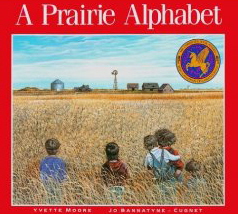
A theme alphabet book is built around a central idea. All of the words used and the objects illustrated in the book relate to that central theme or idea. For example, all lof the illustrations in A Prairie alphabet relate to items found on the prairies. Pot pourri books, on the other hand, show objects that have no links between them. While this type of alphabet book does not demonstrate any unity in subject matter, there is often unity shown in the illustration style or the over-all tone of the book. For instance, Dr. Seuss’s idiosyncratic illustration style provides a sense of unity to his book, Dr. Seuss’s ABC. Sequential story books tell a story while teaching the letters of the alphabet. The Runaway Bunny by Wanda Gag teaches the alphabet while telling the story of a small rabbit who tries to run away from his mother. (Russell 62)

Concepts taught in alphabet books
Alphabet books teach several important concepts about letters and the alphabet itself.
These include
  • Naming of letters
    o A child learns that the “funny marks” on the page actually have names
  • Visual recognition
    o A child learns to recognize individual letters and that certain objects are associated with certain letters
  • Discrimination
    o A child learns the different phonetic sounds that letters make
  • Alphabetical order
    o A child learns the order of the alphabet
  • Vocabulary development
    o A child expands his/her vocabulary by seeing and hearing new words
Out of all these skills, learning the phonetic sounds of English is perhaps the most difficult. Russell explains why:
we are usually dealing with phonetic sounds when teaching the alphabet. In other words, the purpose of the alphabet is to help the child associate the shape of the letter with the sound it customarily makes. This is not as simple as it sounds. Vowels, for instance, make several sounds from long to short to everything in between. So the letter “A” can be accurately represented by an “apple” or by an “ape” or by an “auto”. Some alphabet books...take care of this problem by offering several objects on the same page to represent the letter. Dr. Seuss’s ABC demonstrates the various sounds in the text: “Oscar’s only ostrich oiled an orange owl today” demonstrates the “O” sounds. Consonants as well can present problems. Two consonants – “C” and “G” can be hard or soft. So “G” may be represented by a giraffe or a gorilla, for example. And then there is the troublesome “X”. Most books rely on “Xylophone” for “X” – but the phonetic sound is closer to “Z”. Dr. Seuss perhaps has a sensible compromise, by using such words as “Axe” and “Extra Fox.” (64)
Evaluating alphabet books
When evaluating an alphabet book pay particular attention to the book’s layout. There should only be one letter per page. A simple, sturdy typeface is best.

Alphabet books should also be age appropriate. Books for younger children should be fairly simple. The best show concrete objects that are familiar to a younger child such as “ball”. The objects shown be realistically illustrated. For example, some children might confuse the objects, cup and mug. As noted above, the words chosen should also be phonetically correct. In other words, the word “knight” with its silent “k” is not used to illustrate the letter, “k”. Finally, there should be only one letter and object per page.

Older children will appr eciate more complicated pictures in their alphabet books. There may be more than one object on the page. The objects shown do not have to be so familiar: no child has seen a dragon, but he/she will know what one looks like. In addition, the objects do not have to be realistically illustrated. More difficult words may be used in alphabet books for older children.

Two other factors to consider when evaluating an alphabet book: first, make sure that the vocabulary used is meaningful for Canadian children. For example , a British alphabet book may use the word “lorry” rather than “truck”. A young child will find this use of a non-Canadian English word confusing. Secondly, review what words the author has presented for the “difficult” letters in the English alphabet: Q, X, Y, and Z. An effective alphabet book will treat these letters in creative and interesting ways.

Counting books
Also one of the earliest forms of books produced for children, counting books teach children the concepts of numbers and counting. Some counting books may present simple counting; others may incorporate a story line that involves counting.

Concepts taught in counting books
Like alphabet books counting books teach several important concepts. In counting books these include
  • Numerical recognition
    o The child learns to recognize numbers
  • Numerical order
    o The child learns the sequence that numbers follow
  • Concepts of number and quantity
    o The child learns to associate groupings of objects
  • Advanced concepts such as addition and subtraction
    o The child can learn how to perform simple mathematical computations
Evaluating counting books
When evaluating a counting book, consider the book’s over-all design. Generally, simpler is better. The numbers must be easy to identify and should be printed in a simple, clear typeface. Again, age plays a factor in selecting counting books.

For younger children it is best to choose books that feature one large number per page. It is useful to show the word for that number as well. When more than one object is shown, as in all numbers above 1, the objects shown should be identical. A realistic or slightly cartooning style is best for illustrations: the objects being counted should be easily recognizable. Illustrations should appear on the same or opposite page. The child should be able to point to the appropriate objects as they are being counted.

For older children counting books can be more complicated. They may feature addition and subtraction or the child may have to search for a certain number of items in the illustration.

Other types of concept books
Beyond alphabet and counting books, other concept books teach and reinforce various concepts or ideas.

The content of these books ranges from relatively simple concepts such as naming colours and geometric shapes through the more abstract concepts such as telling time and learning prepositions (e.g. over, under, between). These types of concept books provide words to help children to begin labelling the world around them. An effective concept book moves from the familiar to the unfamiliar or from the simple to complex when introducing an idea.

Evaluating concept books
Many of the principles outlined for the evaluation of alphabet and counting books also apply to concept books. Clarity and simplicity are paramount. Illustrations, whether photographs or drawings, should be clear and easily recognizable by a child. Photographs are especially appropriate in concept books for younger children. Illustrations should appear on the same or opposite page for the text they are illustrating. Over all layout should be open and inviting to encourage children to explore the book.

Conclusion
Concept books form an important part of children’s first experiences with books. The best teach children important concepts while entertaining them at the same time. Concept books also help with language development. They teach reading recognition and children begin to learn that there is a connection between our oral and written language. The pictures contained in concept books help children anchor the more fleeting oral language. Positive experiences with concept books help prepare a child for becoming a successful reader.

Monday, February 6, 2012

Evaluating illustrations in children's picture books

The best of the voices that speak to us from children’s books surprise us and expand our sense of life’s possibilities as well as our understanding of ourselves.

Selma Lanes
Down the rabbit hole adventures and misadventures in the realm of children’s literature

Introduction
This module provides you with the skills required to effectively evaluate the illustrations used in children’s picture books. It begins by describing the various visual elements that illustrators use when they create pictures. This is followed by definitions of five artistic styles used by Canadian illustrators in picture books.

When evaluating the illustrations in children’s picture books consider the artist’s use of the following visual elements:

Colour
  • Does the illustrator’s use of colour suit the words?
  • Are there any cultural associations with the colours used?
  • Are the colours used predominantly warm or cool?
  • What is the quality of colour reproduction in the book?
Note: colour is NOT always necessary.

Line
  • How has the illustrator used line in the pictures?
    o Straight horizontal or vertical lines indicate lack of movement
    o Diagonal lines indicate loss of balance and uncontrolled motion, unless resting on a horizontal base
    o Jagged lines indicate breakdown and destruction
    o Curved lines indicate fluidity, less definite or predictable
  • Are the lines heavy or delicate?
Shape
  • How has the illustrator used shape in the pictures?
  • Does the illustrator’s use of shape suit the mood and intent of the pictures?
  • Compare the illustrator’s use of organic (found in nature) shapes
    o Indicate receptivity, also of instability
    o With his/her use of geometric (created by people) shapes
    * Indicate stability
Texture
  • How does the illustrator manipulate line, colour and shape?
  • What visual effects does the illustrator achieve with his/her use of those elements?
  • Does the illustration have tactile feel to it?
Dominance
  • What elements dominate the illustration?
  • Consider the illustrator’s use of –
    o Size: what are the largest elements in the illustration?
    o Colour: does one colour dominate the illustration?
    o Centre: where is the focal point of the illustration?
  • Are dominate element(s) consistent with the text?
Formality
  • There are several levels of formality.
  • Determined by how illustrations are placed relative to the words
    o Most formal
    * Words on the opposite page from the text
    o Less formal
    * Words and text are on the same page but are separate from each other
    o Least formal
    * Illustrations and text are integrated into one unit
    * Illustrations may appear inside, between or around the text
    * Wordless books that contain no text, only picture
Composition
  • Consider each illustration individually
  • Each illustration should have
    o Unity
    o focus
  • Analyze how illustrator has used white space
  • Each illustration should match or extend the action being described in the text
Overall
  • Consider all the illustrations in the entire book
  • There should be a unity
    o Style of illustrations should complement the text
  • There should be a visual balance and rhythm to the book
Some final questions to ask
  • Do the visual elements complement, not conflict with the story?
  • Does the design of the individual illustrations and book as a whole
  • Do the illustrations help the reader anticipate the unfolding of the story’s action and climax?
  • Are the illustrations accurate in historical, cultural and geographical details?
Picture books in Canada: five illustration styles
The following section describes five major art styles used by Canadian illustrators in picture books. You’ll notice that realism or representational art is not included in these five categories. Representational art is easy to recognize –
... [it] depicts subjects as they are seen in everyday life. Representational artists do not necessarily attempt to create photographically exact images of their subjects. Instead, they create compositions that clearly refer to people, objects or natural phenomena in realistic ways. (Norton, 163)
This section is based on a discussion of illustration styles by Shelia Egoff and Judith Saltman in The New Republic of Childhood.

1. Native/folk art
In its truest style this style refers to the work of self-taught artists ... and is recognized by such characteristics as doll-like or distorted figures, tentative draughtsmanship, absence of perspective, brilliant colour, and intricate patterns ... (174)

Native/folk artists include Ann Blades, William Kureleck, Sheldon Cohen, Stefan Czernekci, Wang Kui, Tomie de Paola, Leo and Diane Dillion, and Alice and Martin Provenson.
Ida and the Wool Smugglers

2. Cartooning
[Cartooning] is represented by the largest group of illustrators, who tend to be visual narrators, storytellers and humorists in contrast to the more restrained artists of magic realism or naive art. (175)

Cartooning, a branch of Expressionism, seeks to express emotional interpretation of the words, rather than a realistic representation.

Characteristics of cartooning include –
  • Deliberate distortion and exaggeration
    o Distortion
    * Characters, objects, settings, actions or situations
    o Exaggeration
    * Lends a playful air of incongruity to illustrations
Three styles of cartooning are found in Canadian picture books:
  • Bright colours
    o Provides a more contemporary feel to illustrations
  • Softer colours
    o Provides a more traditional feel to illustrations
  • Surrealistic/grotesque
    o May provoke a dream/nightmare like quality to illustrations
    o Figures, setting or situation are visually distorted
Cartooning artists include Brenda Clark, John Bianchi, Michael Martchenko, Kim La Fave, Kady McDonald Denton, Stephanie Pouline and Marie-Louise Gay.

Other cartooning artists who illustrate children’s picture books include – Quentin Blake, John Burningham, Don Freeman, Stephen Kellog, Jack Kent, James Marshall, David MacPhail, Bill Peet, Dr. Suess, William Steig, James Stephenson, Phoebe Gillman, Maryann Kovalski, Catherine O’Neill, Bill Slavin, and Werner Zimmerman.

3. Romanticism
As a style and approach to art, romanticism uses literary, historically remote and exotic subject matter and treats it in an emotional and dramatic manner. (178)

Romanticism often creates an exotic, romantic, Gothic atmosphere. Very suitable for European folk and fairy tale.

Artists who use romanticism include Canadians Robin Muller, Lazlo Gall and Elizabeth Tyrell and American artists Trina Schart Hyman, Mercer Mayer, David MacPhail and Ed Young.

4. Magic Realism
The art form is basically realistic, but with a slight intrusion of something unreal – a magical element or overtone [scale or perspective or something fantastic] that can create a supernatural atmosphere. Its images can be drawn from dreams and the unconscious, with symbolic allusion and luminous or psychedelic colouration.

Artists that draw in a magic realism style include Eric Beddows, Warabe Aska, Gilles Tibo and Ian Wallace. Other artists include Americans Jan Brett, Robert McCloskey (see Time of wonder), and Chris Van Allsburg, Canadians Jan Thornhill and Ron Lightburn, and Britain’s Anthony Browne.

5. Stylists
A handful of illustrators may be categorized primarily as stylists because they use a specific medium for the transmission of idea and story. (171)

Stylists include Canada’s Elizabeth Cleaver, Barbara Reid, Ron Broda, Pierre Paul Pariseau and Paul Morin, Americans Eric Carle, Ezra Jack Keats and Leo Lionni, and Britian’s Brian Wildsmith.

Alice’s adventures in Wonderland is, next to the Bible, the most widely translated and quoted book in the world. Virtually everyone who reads it interprets the story in a different way. The same is true of the different artists who have illustrated the story over the years. By looking at the way five different artists have illustrated one scene, we can see the no one style illustration is correct. We all react to these pictures in different ways. Note how the different artists have used the visual elements of colour, line, shape, and texture and the design elements of composition and dominance to create highly individual interpretations of the same scene.

Alice illustrators include the British Arthur Tenniel, who was the original illustrator of the 1865 publication, the 1907 American illustrator Maria Kirk, Gertrude Kay, whom illustrated from American in 1923, Britain’s Arthur Rackham, who illustrated the British 1907 edition and was one of the first to illustrate children’s books along with Kate Greenaway and Walter Crane, and Gwynedd Hudson, who illustrated in 1922.

The following illustrations have been grouped together according to illustration style. Consider how the artists have used the various elements described to create their pictures.

Native/folk
Anderson, Sue Ann. Ida and the Wool Smugglers. Ill. By Ann Blades. Vancouver, BC: Douglas, 1987.

This story is set on an island off the BC coast during the last century. Ida, the protagonist, is too little to hold the neighbour’s new-born baby. She is also too little to participate in the island’s annual sheep run. But, she manages to outwit two sheep smugglers, save an ewe and her twins, and hold her own sheep run. And, yes, she does get to hold the baby at the end of the story.

Notice Blade’s use of colour and intricate patterns in her illustrations. Her lack of perspective is typical of the style of native art.

Kureleck, William. A Prairie boy’s winter. Montreal, PQ: Tundra Books, 1973.
William Kurleck is one of Canada’s best-known artists. Kurleck’s family came from the Ukraine and originally settled in Alberta. They then moved to a dairy farm in Manitoba, near the American border and William grew up there in the 1930’s. That farm is the setting for this book. When he was 16, William was sent to school in Winnipeg. He was eager to tell of his adventures on the farm, but no one would listen. He didn’t find an audience for years. A Prairie boy’s winter consists of 20 full-colour oil paintings. “Fox and Geese” shows a typical children’s game; “Return of First Crow” shows the beginning of spring, after a long, hard prairie winter. Contrary to the happy, idyllic nature of this book, William apparently had a miserable childhood.

Notice how Krueluk uses space as a major element in these illustrations.

Carrier, Roch. The Hockey Sweater. Ill. By Sheldon Cohen. Montreal, PQ: Tundra Books, 1984.

Many of us are familiar with this classic Canadian story about hockey. It first appeared as an animated film and won numerous awards. Set in St. Justine, Quebec, the story focuses on one young boy’s passion for hockey, the Montreal Canadiens and Maurice Richard. Our hero needs a new sweater, so his mother orders one – a Montreal Canadiens sweater, of course – from the Eaton’s catalogue. But, horror of horrors, Monsieur Eaton sends the wrong one – a Toronto Maple Leafs sweater! Our hero is crushed, and ends up in church where he prays for moths to come and eat his Toronto Maple Leafs sweater!

Note the evocative expressions on the character’s faces and Cohen’s use of colour.

Czernecki, Simon. Zorah’s magic carpet. Winnipeg, MB: Hyperion Press, 1995.
This is a very complex story with references to a variety of different cultures. The two main characters are Zorah and her husband Akhmed, Berbers who live near the city of Fez in Morocco. In the story, Zorah weaves a magic carpet and uses it to visit far away lands. Zorah visits the Ukraine, near the outskirts of Kiev, where she meets a family who are holding a wedding and gives the bride a gift – the slippers from her feet. In turn, the bride gives Zorah her vinok, the traditional wedding head dress. Zorah travels to India too, where she gives a young woman her silver necklace and in turn is given a peacock.

Froese, Deborah, reteller. The Wise Washerman ill. By Way Kui. Winnipeg, MB: Hyperion Press, 1996.
This retelling of a traditional Burmese tale shows that jealousy can be a very destructive emotion. Potter Narathu is jealous of his neighbour, Aung Kyaing’s success and plots to ruin his reputation. Of course, his scheme backfires and it is Narathu that ends up being banished at the end of the tale ... Wang Kui, a Chinese Canadian drew upon his heritage when creating these luminous illustrations which evoke the magic of the far-away land of Burma.

2. Cartooning
Bourgeois, Paulette. Franklin fibs. Ill. by Brenda Clark (early illustrations). Toronto, ON: Kids Can Press, 1991.

In each of the Franklin books, Franklin is faced with a dilemma of sorts. He manages to solve it, usually with some loving help from his parents.

In this particular story, the problem has become about because Franklin told a lie ... it all started when Franklin’s friend, Bear, boasted about being able to climb the highest tree ... Franklin’s other friends also boast, very much like small children standing around the schoolyard ... then Franklin does it too ... and tells his friends that he can swallow twenty-six flies in the blink of an eye ... Franklin uses some delaying tactics, but finally he discusses his problem with his parents ... and ultimately he solves his own problem by baking seventy-six flies into a pie. There is a nice touch at the end of the book: Franklin is proud, but doesn’t boast.

Note how Clark uses colour and shape to create a mood in her illustrations. You’ll also notice an incredible amount of detail in her drawings; in fact, the natural environment that she shows is authentic.

Edwards, Frank B. Mortimer Mooner stopped taking a bath. Ill. By John Bianchi. Newburg, ON: Bungalow Books, 1990.
Bungalow Books, started by Frank B. Edwards and John Bianchi, has been a major hit in the last few years. Their picture books, featuring cartoon style animals, are very appealing for young children.

In this story Mortimer Mooner decides to stop taking baths. He also doesn’t clean his teeth or clean up his room. This behaviour continues until his grandmother comes to visit and she is forced to fend him off with an umbrella. And, guess what? Mortimer decides to take a bath.

Munsch, Robert. Show and tell. Ill. By Michael Martchenko. Toronto, ON: Annik Press, 1991.
Martchenko, an advertising artist by training, has illustrated the majority of Munsch’s books. They are one of the perfect pairings in Canadian children’s picture books. Martchenko is able to take Munsch’s words and turn them into images that are bright, beautiful and full of life. In Show and tell, Benjamin wanted to take something really neat to school for show and tell, so he decides to take his baby sister. Well, you can imagine the chaos that ensues. One of Martchenko’s real strengths is his ability to show motion.

Morgan, Allen. Matthew and the midnight monkey man. Ill. By Michael Martchenko. Toronto, ON: Annik Press, 1987.
Martchenko has also illustrated the Midnight Matthew series, written by Allen Morgan. These are contemporary urban stories. In this particular story, Matthew and the Midnight Money Man end up at the mall, searching for the perfect Mother’s Day gifts for their own mothers ...

Since the Matthew stories all take place after he has gone to bed, he appears in his pyjamas, but notice other items of clothing he wears. And each story ends with the question: did it really happen or was it just a dream?

Lunn, Janet. Amos’s sweater. Ill. By Kim La Favre. Toronto, ON: Douglas & McIntyre, 1988.
“Amos was old. And Amos was cold. And Amos was tired of giving away all his wool.” So begins this wonderful story about an old sheep and how he eventually gets to wear a sweater that keeps him warm. Meet Amos, see him without his wool, complete with band aids because Aunt Hattie has taken his wool to knit into a sweater for Uncle Harry. But Amos hates that sweater and uses every opportunity to snatch at it, making big holes in it. Guess what Amos ends up wearing?

La Favre’s style of cartooning is gentler, and her use of color is very muted.

Gibson, Betty. Little Quack. Ill. By Kady MacDonald Denton. Toronto, ON: Kids Can Press, 1990.

Again, we see a gentler, more romantic style of cartooning.

In this story, Jackie lives on a farm and has many animals to play with, but he is lonesome. His mother buys him a duck and he names it Little Quack. She plays with him and becomes his best friend. One day Little Quack runs away and the family finds her at another farm. Jackie continues to play with her, but she runs away again. Over a month later he finds her with ten ducklings and tries to get them home again so that neither Jackie nor Little Quack will ever be lonely again.

Poulin, Stephane. Can you catch Josephine? Montreal, PQ: Tundra Books, 1997.

Poulin is a French Canadian writer and illustrator. Can you catch Josephine? is a continuation of Have you seen Josephine? It continues the adventure of Daniel and his cat. We follow Daniel as he chases Josephine around his school. Children identify with Daniel, but also, on another level, they identify with the cat. The story ends in the principal’s office, but with a pleasant surprise.

Note Poulin’s use of distortion: his characters, especially his children, are squat, unattractive figures, but still very appealing.

Gay, Marie-Louise. Rainy day magic. Toronto, ON: Stoddart, 1987.
We now move into a more grotesque, almost surrealistic style of cartooning. Most of Gay’s books seem rooted in reality, but there is usually something just a little odd about her stories and pictures.

In Rainy day magic, two children are forced to play inside on a rainy day. Note the father’s reaction to the children’s noise. The children move to the basement, but did the adventure really happen? Perhaps ... because at the end, we see the little girl has a starfish in her hair when she sits down for supper.

3. Romanticism
Muller, Robin. The Sorcerer’s Apprentice. Toronto, ON: Kids Can Press, 1985.
Muller uses his illustrations to create a romantic, Gothic atmosphere in this book. Note his use of perspective: how one element dominates the page. This is a very romantic story about a young man named Robin. An orphan, Robin meets up with an evil sorcerer who owns a white dove. The dove turns out to be... well, you’ll have to read the story to find out who she really is. Of course, this story has the traditional happy ending.

Ehrlich, Amy. Pome and Peel. Ill. By Lazlo Gall. New York, NY: Dial Books for Young Readers, 1990.
Gall came to Canada during the Hungarian uprising in the 1950’s. He has worked a variety of jobs, including being a set designer at CBC. In this book, his illustrations do not extend the story in the usual way, rather they stand apart from the text. They are more like windows into a special fairyland where the figures appear frozen. There is a very stately feel to his pictures and the details, such as the costuming, are usually authentic.
In Pome and Peel, he illustrates a traditional folk tale from Italy.

Tyrell, Frances. Woodland Christmas. Richmond Hill, ON: North Winds Press, 1995.
Is it romanticism or magic realism? This book clearly blurs the edges between these two categories. In this beautiful retelling of the classic Christmas carol, “The Twelve Days of Christmas,” a handsome young black bear courts his true love with twelve gifts. These are gifts with a difference, for example, the calling birds are loons and the lords a leaping moose! The book ends with the wedding of the two black bears.

4. Magic Realism
Wynne-Jones, Tim. Zoom away. Ill. by Eric Beddows. Toronto, ON: Douglas & McIntyre, 1985.
Zoom away is the first of three books about the magical cat, Zoom, and his adventures. You’ll notice that the art is basically realistic, but something unreal or magical has intruded into the picture. Did you ever see a cat knitting? All the illustrations are black and white and the figures not exaggerated. In Zoom away, Zoom goes to the North Pole with his friend, Maria, to try to rescue his Uncle Roy. They reach the Arctic through Maria’s house. However, they don’t find Uncle Roy, but only his ship the Catship, leaving the way open for the other two books in this trilogy.

Manguel, Alberto, selector. Seasons. Ill. by Warabe Aska. Toronto, ON: Doubleday, 1990.
Aska, a Japanese Canadian, has illustrated a number of beautiful books. In Seasons, he visually interprets the seasons as described through the poetry selected by Manguel.

Tibo, Giles. Simon in the moonlight. Montreal, PQ: Tundra Books, 1993.
The Simon series are very charming books, sutiable for very young children. In this particular book, Simon is trying to understand why the moon disappears. His friend Marlene helps him – he tries to push on a swing so that she can touch the moon, and later they try to catch pieces of the disappearing moon in a blanket.

Andrews, Jan. Very last first time. Ill. by Ian Wallace. Toronto, ON: Douglas & McIntyre, 1985.
Ian Wallace is a very prolific illustrator and author of children’s books. In Very Last First Time, he illustrates the story of Eva Padlyat, an Inuit girl who lives in Ungava Bay in the Canadian north. Here, in the winter, people walk on the bottom of the sea when the tide is out to gather mussels. Now, Eva will go by herself. She quickly fills up her mussel pan and begins to explore. Her candles go out and she loses her way. But she does find her way back and her mother comes for her. And, of course, she gets to eat the mussels.

Notice Wallace’s use of colour. His technique is to often interject an element of fantasy into a realistic story.

5. Stylists
Toye, William. The Loon’s necklace. Ill. by Elizabeth Cleaver. Toronto, ON: Oxford, 1977.
In the late 1970’s, William Toye, an editor at Oxford University Press, retold four Indian legends and Elizabeth Cleaver illustrated all of them. Cleaver was an exceptional artist who went to great lengths to create her illustrations. She made her own paper and used a variety of techniques of artistic techniques including collage, linocuts and shadow puppets. In The Loon’s Necklace, she used collage.

The Loon’s Necklace is a story from Western Canada. It is about an old man who is sad because he has lost his sight and cannot look after his wife and young son. The man manages, with the help of his son, to shoot a bear. But an old hag steals the meat. The man goes to the lake to seek Loon’s advice. He dives with Loon, once – and regains partial sight and twice – and has his sight restored. In gratitude, he throws his shell necklace towards Loon. The beads scatter, and where they land, they make markings on Loon’s neck and back. Now when we hear Loon’s call – a long, joyful trill, we know he’s proud of his necklace.

Oppenheim, Joanne. Have you seen birds? Ill. by Barbara Reid.
Toronto, ON: North Winds Press, 1986.
Reid is an accomplished illustrator who uses plasticine as her medium. A skillful artist, she is able to create a three-dimensional feel to her illustrations.

Oppenheim, Joanne. Have you seen bugs? Ill. by Ron Broda. Toronto, ON: North Winds Press, 1996.
Ron Broda uses paper sculture to create his amazing sculptures. Authentic in all details, his illustrations fully complement the book’s text. It can take Broda up to a year to create the illustrations for one book.
Burton, Katherine. One Grey Mouse. Ill. by Kim Fernandes. Toronto, ON: Kids Can Press, 1995.
This is a counting book with a difference. Fernandes uses phimo, an acryclic clay, to make her illustrations lending a three dimensional effect to her pictures.

Creighton, Jill. 8 O’cluck! Ill. by Pierre Paul Pariseau. Richmond Hill, ON: Scholastic, 1995.
Pariseau uses the unusual technique of collage when creating his pictures. But, in a different way from Cleaver, who wove different elements into her pictures. Pariseau clips “interesting bits” from print, mostly magazines, and glues them together to make pictures.
In this story the Wolf, the perennial bad guy, (isn’t he charming?) thinks that he is going to have fowl for dinner ... but the birds outwit him – guess what they are about to enjoy at their banquet?

Works cited
Shelia Egoff and Judith Saltman. The New Republic of Childhood. Toronto, ON: Oxford University Press, 1990.
Norton, Donna E. Through the Eyes of a child. 4th edition. Englewood Cliffs, NJ: Merrill, 1995.
Carroll, Lewis. Alice’s Adventures in Wonderland. The Ultimate Illustrated Edition, Compiled and Arranged by Cooper Edens. Toronto, ON: Bantam Books, 1989.
Anderson, Sue Ann. Ida and the Wool Smugglers. Ill. by Ann Blades. Vancouver, BC: Douglas, 1987.
Kureleck, William. A Prairie Boy’s Winter. Montreal, PQ: Tundra Books, 1973.
Carrier, Roch. The Hockey Sweater. Ill. by Sheldon Cohen. Montreal, PQ: Tundra Books, 1984.
Czernecki, Stefan. Zorah’s Magic Carpet. Winnipeg, MB: Hyperion Press, 1995.
Froese, Deborah. The Wise Washerman. Ill. by Wang Kui. Winnipeg, MB: Hyperion Press, 1995.
Bourgeois, Paulette. Franklin Fibs. Ill. by Brenda Clark. Toronto, ON: Kids Can Press, 1991.
Edwards, Frank B. Mortimer Moon Stopped Taking a Bath. Ill by John Bianchi. Newburg, ON: Bungalow Books, 1990.
Munsch, Robert. Show and Tell. Ill. by Michael Martchenko. Toronto, ON: Annik Press, 1991.
Morgan, Allen. Matthew and the Midnight Money Van. Ill. by Michael Martchenko. Toronto, ON: Annik Press, 1987.
Lunn, Janet. Amos’s Sweater. Ill. by Kim La Favre. Toronto, ON: Douglas & McIntyre, 1988.
Gibson, Betty. Little Quack. Ill. by Kady MacDonald Denton. Toronto, ON: Kids Can Press, 1990.
Poulin, Stephane. Can You Catch Josephine. Montreal, PQ: Tundra Books, 1987.
Gay, Marie-Louise. Rainy Day Magic. Toronto, ON: Stoddart, 1987.
Muller, Robin. The Sorcerer’s Apprentice. Toronto, ON: Kids Can Press, 1985.
Ehrlich, Amy. Pome and Peel. Ill. by Lazlo Gall. New York, NY: Dial Books for Young Readers, 1990.
Tyrell, Elizabeth. Woodland Christmas. Richmond Hill, ON: North Winds Press, 1995.
Wynne-Jones, Tim. Zoom Away. Ill. by Eric Beddows. Toronto, ON: Douglas & McIntyre, 1985.
Manguel, Alberto, selector. Seasons. Ill. by Warabe Aska. Toronto, ON: Doubleday, 1990.
Tibo, Gilles. Simon in the Moonlight. Montreal, PQ: Tundra Books, 1993.
Andrews, Jan. Very Last First Time. Ill. by Ian Wallace. Toronto, ON: Douglas & McIntyre, 1985.
Toye, William. The Loon’s Necklace. Ill. by Elizabeth Cleaver. Toronto, ON: Oxford, 1977.
Oppenheim, Joanne. Have You Seen Birds? Ill. by Barbara Reid. Toronto, ON: North Winds Press, 1986.
Oppenheim, Joanne. Have You Seen Bugs? Ill. by Ron Broda. Toronto, ON: North Winds Press, 1996.
Burton, Katherine. One Grey Mouse. Ill. by Kim Fernandes. Toronto, ON: Kids Can Press, 1995.
Creighton, Jill. 8 o’cluck! Ill. by Pierre Paul Pariseau. Richmond Hill, ON: Scholastic, 1995..

Monday, January 30, 2012

Evaluating children's literature

There are many ways of evaluating Children’s Literature. Mary Norton, in Through the eyes of a child, provides a set of questions that expands the material presented in class. You should review these questions and apply them as well when you’re evaluating a children’s book.

1. Is it a good story?
2. Is the story about something I think could really happen? Is the plot believable?
3. Did the main character overcome the problem, but not too easily?
4. Did the climax seem natural?
5. Did the characters seem real? Did I understand the characters’ personalities and the reasons for their actions?
6. Did the characters in the story grow?
7. Did I find out about more than one side of the characters? Did the characters have both strengths and weaknesses?
8. Did the setting present what is actually known about that time or place?
9. Did the characters fit into the setting?
10. Did I feel that I was really in that time or place?
11. What did the author want to tell me in the story?
12. Was the theme worthwhile?
13. When I read the book aloud, did the characters sound like real people actually talking?
14. Did the rest of the language sound natural? (124)

Beyond literary elements we also need to look at the value of the story. Good literature, whether it is intended for children or adults, is multi-layered. Peel back the elements, such as plot and characterization, and ask what effect will that particular book have on the reader.

Edward H. Rosenheim, Jr. Explores the effect of literature on children with the following list of questions from an essay in Only connect:
  • Will this book call into play my child’s imagination?
  • Will it invite the exercise of genuine compassion or humour or even irony?
  • Will it exploit his capacity for being curious?
  • Will its language challenge his awareness of rhythms and structures?
  • Will its characters and events call for – and even strengthen – his understanding of human motives and circumstances, of causes and effects?
  • Will it provide him with a joy that is in some part the joy of achievement, of understanding, of triumphant encounter with the new?

Monday, January 23, 2012

Notes on picture books

  • Picture books provide children with visual experience that is different from story books.
    Definitions
    • Story book
    o Puts emphasis on story
    * Words carry the story
    * Plot development
    o Can be fully understood without pictures
    * Pictures’ purpose is to enhance words

    • Picture book
    o Words cannot stand on their own
    o Meaning of story unclear without pictures
    * Pictures supplement text
    * Provide info not contained in the words
    * Also may clarify or take the place of text
    o Picture books are plot oriented
    o Little room for character development

    • Story books express both sight and sound through words. Picture books separate the two.

    • Sight = pictures
    • Sound = words
    o Not a matter of number of words or pictures
    o Essence is different
    o Picture book presents a unique concept
    o Both pictures and words are “read”

    • Picture books are naturally more dramatic than story books
    o No words to interfere
    o See and hear directly
    o Direct, immediate and vivid
    o A lot is happening in the picture


    • Picture books require two kinds of interpretation
    o Verbal/text
    o Pictorial
    • Because meaning is generated in two different ways
    o Not read the same way as a story book
    * Read pictures through the words
    * And the words through the pictures
    • Unceasing interplay and interaction between words and images

    • How words and pictures work together in picture books:
    o Two mutually dependent ways of telling a story

    • Words drive us forward
    o Find out the complete meaning
    • But pictures may pull us back to explore illustrations in more detail

    • Some terms used to describe the functions of illustrations
    o Extend/elaborate/amplify/expand
    * Expands a child’s realm of experience
    * Picturing things child could not have imagined on their own
    * Extend words by showing details that not included/emphasized in the text
    * Pictures can fill in the gap
    * May change our responses to the text
    • Example: create atmosphere – Fairy Tales
    o Romantic to gothic
    o Medieval to modern
    o Realistic to grotesque
    * May amplify words, but at the same time
    • Limit theme – offer only one interpretation
    • E.g. Where the wild things are – much less frightening than what you could imagine on your own
    o Complement/complete
    * Words tell what pictures cannot show
    * Provide a soundtrack
    • E.g. “roared their terrible roars” from Where the wild things are
    * Words can be non specific
    • E.g. Text reads: One Monday morning
    o Pictures show setting (see below)
    o Redundancy
    * Illustration supported by very few words
    * (are they even necessary?)
    o Symmetrical
    * Words and illustrations are identical
    • Picture books and setting
    o Words describe space/setting
    o Illustrations show it
    o Artist/editor decides what to leave in/take out
    o Illustrations act like scenery in a theatre
    * May be realistic, symbolic, elaborate, simple
    o If no words, reader can interpret more freely
    o Historical
     Provide details
    o Fantasy
    * Provide details
    • Setting ...
    o Limited visual settings
    * Book does not date as quickly
    o Setting may determine how we read the story
    * Place the story in context
    o Setting can create/enhance mood
    * Is setting integral or a backdrop?
    * Can contribute to plot development
    • Creates conflict by moving character out of familiar surroundings
    * Are there jokes in the setting
    • E.g. Things to be read on boxes, cars, buildings
    * Diversion distracts us from the action (e.g. In the night kitchen)
    * Takes our attention from words

    • Pictures cannot communicate every idea
    o Sometimes do not convey information more readily than words
    * E.g. – child sitting at a window
    * How long? Just sat down?
    * Purpose
    * Remembering? Planning? Waiting for someone?
    o May need words to fully understand the pictures

    • But pictures can tell us about the way things look
    o Give us information/knowledge of character’s appearance and personality
    o Help children with limited linguistic ability

    • Pictures show things words cannot convey
    o Pictures get our attention
    * Demand an emotional response
    o Both to the style of picture and how subject is depicted

    • Pictures can change the meaning of words by interpreting them in a specific way
    o Vague words?
    * Pictures provide more specific information
    o Children like looking for clues and detail
    * e.g. Richard Scarry – like a visual puzzle

    • Picture books and characters
    o Description can be both visual and verbal
    * Can confirm or contradict each other
    o Can demonstrate how character relates to setting
    o Physical describtion best done by illustration
    some internal characteristics can be difficult to illustrate
    * E.g. brave, clever, innocent
    o Can be suggested through poses, gestures, facial expressions
    * Need support from the words
    o Emotions and attititudes are easier to illustrate
    * E.g. happiness, anger, fear
    * May need little support from the words

    • Pictures cannot show time passing
    o Series of pictures
    * Shows only a sequence of isolated movements
    * Not the connection between those two movements
    o Words describe space and time
    * Pictures can show only space
    o Double page spreads – no words
    * E.g. Where the wild things are
    o Further enhance rhythm created by our movement between pictures and words
    o Concerntrate our attention on a series of carefully perceived movements of stopped time
    o Length of time between pictures?
    o How long does the action in the picture last?
    * E.g. Where the wild things are

    • How is movement depicted in still pictures?
    o Blurs, motion lines, distortion of perspective
    o Action in progress, action not yet complete
    * E.g. character with foot about to step
    o Clarify an action, link two pictures together
    * E.g. millions of cats
    • Growing plump, pond, grass

    • How we read pictures
    o Scan pictures in Western World
    o Read from left to right
    o Top to bottom
    o If we go from left bottom to top right corner
    * Diagonal – creates uneasiniess
    o What happens if picture is reversed?

    • Some final questions about picture books
    o Should pictures be clear, simple and colourful?
    o Should not be abstract?
    o Should not be large/out of scale?
    o Are pictures easier to understand?
    o Pictures contain information that allows children to understand the words
    o Are children that simple-minded?
    o Words are not harder to understand
    o Children understand words before they can actually speak
Sources: 
Niklajeva, Maria and Carole Scott. How Picture Books Work. New York : Garland Publishing, 2001.
Egloff, Shelia et al. Only Connect Readings on Children’s Literature. Toronto: Oxford University Press, 1996.